
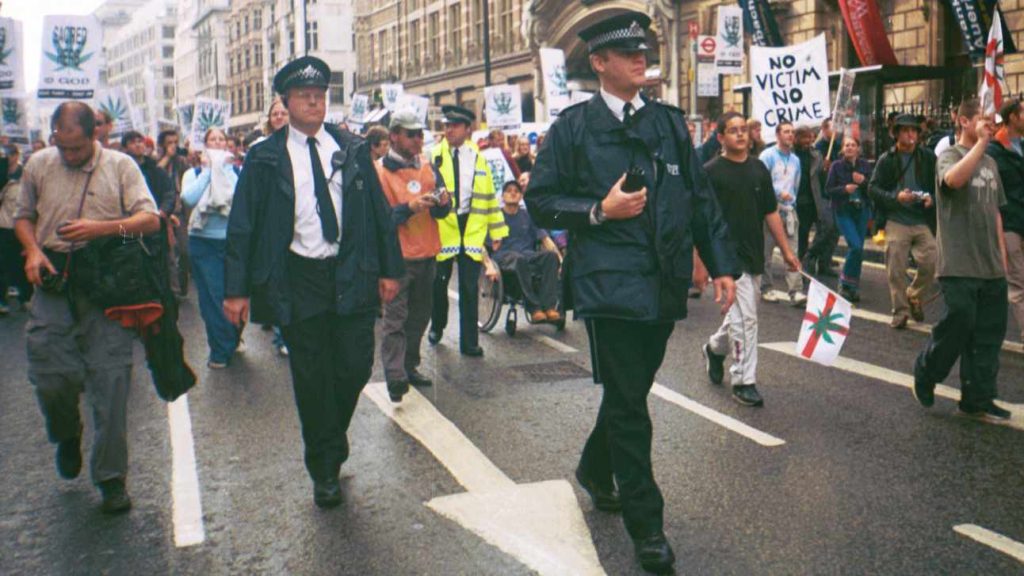
It’s often claimed that Britain has a huge drugs problem, that’s not true, Britain has a huge drugs law problem and it’s all because that law is based on what most people would call a lie.
The present drugs policy is promoted as being there for the protection of society and the individual. It is indeed possible that was the honest belief of those who promoted the laws in the first place, but it hasn’t worked out that way because it didn’t take account of two important considerations:
- The goal of government policy should be to lessen potential harm related to its intended purpose.
- People will not do as they are told unless they see a reason for it.
UK drugs policy didn’t seem to bothered about either of those considerations. So how did we get in this mess?
The problem is created
The law that created the serious problems we see today was born in the 1960’s, intended as our government’s compliance with the UN Single Convention of 1961, a UN treaty which required countries to ‘control’ the worldwide cultivation, production, supply, trade and transport of a range of specific psychoactive drugs, notably including cannabis, heroin and cocaine amongst others. None of these substances was much of a problem in the UK at the start of the 60’s, the aim of the convention was to prevent such a thing occurring. The UK had signed up to the UN convention, so we needed a domestic law to comply with it.
A problem was identified with cannabis when the law was being drafted however. Although not common in the UK, cannabis use was traditional in many of our colonies and had already been the subject of a government study – “The Indian Hemp Drugs Commission Report” – which didn’t identify a serious issue with its use.
A Royal Commission of experts (The Wootton Report of 1968) looked at cannabis and concluded that it was not as dangerous as some claimed and did not cause violent crime or severe dependence. The Royal commission advised that cannabis should have a fairly liberal regime and not be fully criminalised.
However, In the 1960’s we were seeing mass immigration of people from the ex-colonies and cannabis was arriving with them, along with their vibrant culture, so cannabis use was associated with people who had dark skin. There was also the explosive growth of youth culture in which cannabis was playing a major role, along with other substances such as LSD and amphetamines.
Because of a mixture of racism and fear of a rebellious youth culture, politicians ignored the advice of the experts it had appointed and rejected the recommendation of Wootton. And so the new law was born.
The misuse of drugs act 1971: MoDA
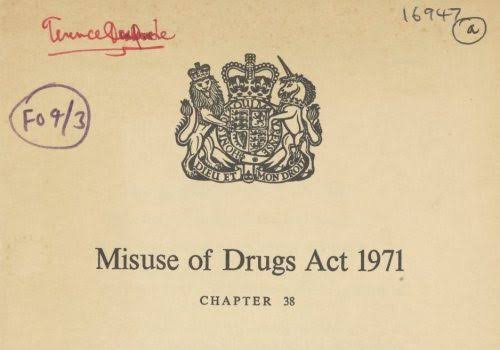
The Misuse of drugs Act 1971 (MoDA) was introduced by the Labour government of Jim Callaghan, actually in 1973. Alcohol and tobacco were specifically excluded from the MoDA on the basis that those two drugs were deeply engrained in British culture and they probably weren’t considered to be “drugs” by politicians. Indeed, even today you will hear people talking of “drugs and alcohol”. We’ll return to alcohol and tobacco later, but it should be noted this same exemption was not given to cannabis, although the same degree of social acceptance existed in our immigrant communities. This inevitably provided the first spark of conflict.
The policy the MoDA created for ‘recreational’ or ‘non-medicinal’ drug use is, in effect, prohibition. Because it uses the criminal law to force people to make choices about their private lives they don’t want to do, it proved all but impossible to enforce compliance, this only grew over time. The MoDA has been worse than a failure, it’s created far bigger dangers for individuals and wider society than drug use ever could have done, because it created a massive illegal supply industry.
When control isn’t really control
The MoD act is called “drug control” and drugs listed in it are termed “controlled substances”. However, the words ‘control’ and “controlled” are not the plain English use of the words you might expect, they’re a legal term. which in this context means ‘included in the MoDA’. What the MoDA actually does is to require a licence to access these substances, a licence which is impossible to get. The result is, in effect, prohibition. Therefore, the MoDA defines the word “controlled” to mean “prohibited” and the resultant market cannot be subject to any actual controls, because in law it cannot exist.
To understand why this definition of the word ‘control’ is important it’s necessary to know something fundamental about criminal laws; they can only apply to the actions of people, laws can’t apply to inanimate objects such as drugs. So drugs, as such, can’t actually be illegal, the law has to relate to what people are allowed to do.
Prohibition means the whole population if forbidden to do anything with these drugs, so in order to work, everyone has to obey the law at all times. This isn’t ‘drug control’, it’s ‘people control’ and it never stood a chance of being successful.
The chaos is born
In fact, by the time the law came into force in the mid 1970’s, cannabis was already becoming well established, a substance enjoyed by an increasing number of young British people and people of foreign origin, suddenly it became a criminal offence – a law imposed on people who didn’t have any intention of obeying it.
At first the law focussed on people mostly suspected of simple possession. Openly racist policing focused on immigrant communities, notably in Notting Hill in London. the Mangrove Caribbean restaurant became a famous case of racial harassment. At the same time many young people following sub-cultural trends would suffer stop searches simply because the police believed they might be carrying drugs. The result of this, almost from day 1, was to create tension between the police and many communities.
Many hundreds of thousands of otherwise law abiding, non violent people were dragged through the courts often with careers and lives ruined as a result. It also fuelled racial tensions between the police and ethnic communities. What it didn’t do was to prevent the uptake and normalisation of cannabis and other recreational drugs. By the 1980’s strict enforcement had became impossible at which point the law should have been scrapped, but it wasn’t.
It’s fair to say that over the past 50 years. the MoDA has come to be treated with contempt with cannabis use in particular so wide-spread across all backgrounds and ages it easily counts as “normal” in wide swathes of society.
At the same time unemployment and social exclusion saw an explosion in escapist drugs use such as heroin and in high flying circles cocaine became established as the rich person’s tipple. Prohibition was spectacularly unsuccessful at dealing with either of these as well.
The UK had a very successful policy toward heroin addiction before the MoDA. It was called the British System of heroin maintenance and it came into conflict with the aims of the so-called “drug control”.
Very quickly a massive black market trade became established and the number of serious problematic drug users grew massively. In the 1950’s there were a few tens of heroin addicts known to the Home Office, and by the mid 80’s there were many thousands. The AIDS epidemic of the 1980’s forced the government to launch a clean needles programme, suppling the means to use a prohibited drug.
In recent years the uncontrolled supply of heroin and cocaine has created the “county lines” drug gangs, famous for extreme violence, turf wars, child exploitation and much more. The illegal drug trade has grown into a massively serious organised crime problem.
The ‘black market’ supply industry is totally devoid of any legal regulation with the eye watering profits feeding organised crime. The main victims are, of course, the most vulnerable with children suffering greatly.
The black market booms
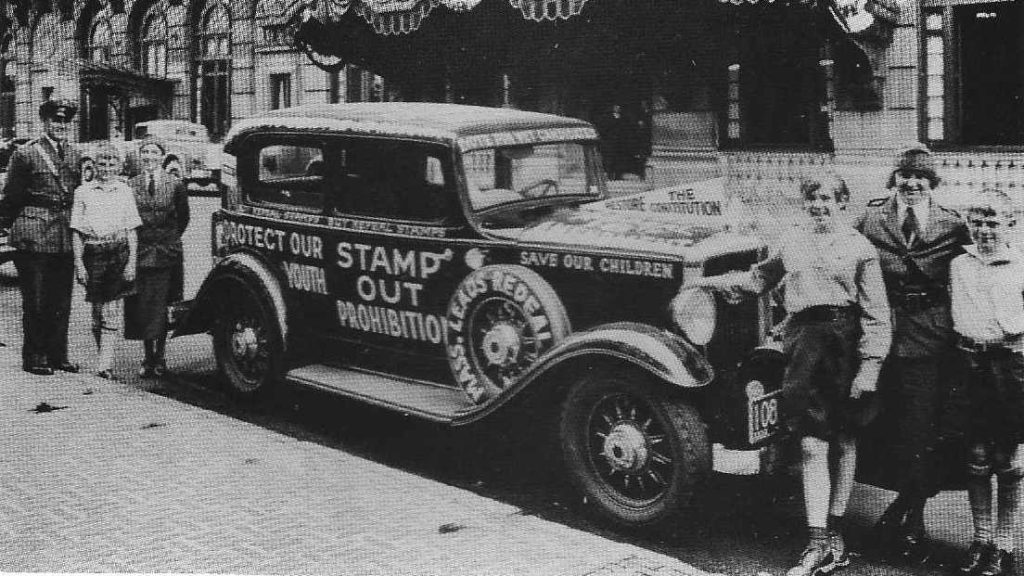
This really shouldn’t have come as a surprise. A famous experiment was conducted in the US in the 1920’s when alcohol was prohibited. The result was the same, an uncontrollable black market run by ‘the mob’, selling an unregulated product that caused huge health and social issues. Alcohol prohibition was eventually repealed and the violence ended. Far from learning from the experience however, the US became the leading exponent of the world wide war on drugs, of which the MoDA is a part.
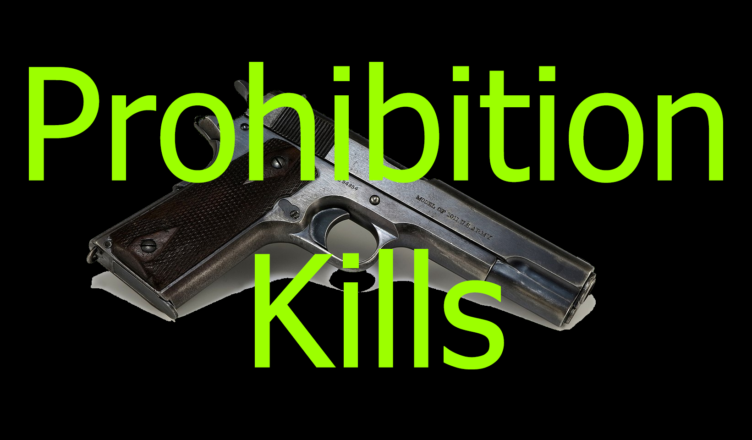
The MoDA has done the same thing here, only very much worse. It is essentially a very blunt tool with a one size fits all policy which has created a long list of ‘unintended consequences’. The drugs it aimed to prevent have become easily available and comparatively cheap while the costs of enforcement have skyrocketed. The social harms from this are massive, with widespread violence and corruption along with the harm from unregulated doses, impure products, outright fakes and much more. Far from reducing harm, the MoDA has created a monster, it has proven to be pure harm maximisation.
So what should drug control look like?
Remember the two recreational drugs which were specifically excluded from the so-called ‘drug control’ law – Alcohol and tobacco? They both demonstrate the most effective way a genuine regime of control can work.
Firstly alcohol and tobacco are very different things, with very different impacts on the user and wider society. So the laws regulating both are different.
Alcohol is strictly regulated in terms of manufacture and sale. A pint of 5% beer is always just that. Sales and branding is allowed, but advertising isn’t. The dealers are licenced and they can lose the licence if they act irresponsibly. Laws cover the public behaviour of people intoxicated, needed because alcohol use is so often associated with violence and road crashes. Alcohol is a dangerous drug, he potential harms of which are massive, but sensible regulation greatly reduces them to a practical minimum, it doesn’t remove the harms entirely and people still get hurt by it, but the majority who use it responsibly are free to do so.
Tobacco is a different sort of drug entirely, being (seemingly) non-psycho active, not intoxicating but highly addictive. Since 2017 it cannot be used in enclosed public venues, cant be advertised and branding is restricted to plain labels and sales displays are not allowed. This has been amazingly effective at reducing use of a drug which had once been seen as normal to little more than a fringe activity.
Both drugs of course have a minimum age for sales, at present 18. Although it should be noted the government of Kier Starmer may have begun to move tobacco into the black market with recent changes to the law with sales being prohibited to anyone “born on or after 1 January 2009”. It will be interesting to see how this plays out, it could be catastrophic.
Nothing like these policies can apply to so-called ‘controlled drugs’. There can be no control over the trade – because it is illegal – and so no control over the product, the sellers or or who can buy it.
Conclusion
All drugs are dangerous to some extent or another. Some are fairly low risk like cannabis , some are highly destructive like heroin. All should be controlled. But that should mean drug control, which s possible, rather than people control, which isn’t.
Drug legalisation is essential, but it’s important to remember that “legalisation” is a big word and can mean many different things, but it can never mean prohibition. Cannabis, for example could be treated in some ways like alcohol while heroin would come through clinics similar to the old British System. For the rest, there are big debates to be had.
The misuse of drugs act is fundamentally flawed, in that it has an impossible enforcement aim and in trying has created a massive black market. It is not really ‘drug control’ but ‘people control’, which relies on enforcement against what consenting people do in private, so it can only ever involve conflict. In failing, the MoDA has created more and bigger problems than drug use ever could have done and the people most at risk are the most vulnerable in society.
And people wonder why we have a drug problem in this country,