Perhaps the most important freedom we can have is mobility, the right to travel where and when you want. In day to day life this ‘freedom of mobility’ means being able to get to the shops, to schools, work, things like that. Freedom of mobility means the ability to live your daily life, not just doing the work-a-day stuff, but socialising and mixing with other people.
Without that basic freedom you really don’t have much left but for many today, that freedom has been taken away.
In the second half of the 20th century, the promise of freedom was used to sell the motor car with freedom of mobility repackaged as the open road, the ability go where you want, when you want. It was a very seductive promise and it worked. Cars became a very desirable thing to own, more than a mere status symbol but an important goal in life.
Since the 1950’s the car was seen as the future and we set about building the towns and cities fit for this exciting future A future of course, which would be built around the car. At first, the idea was to accommodate the car within our existing towns and cities, but that soon gave way to something else.
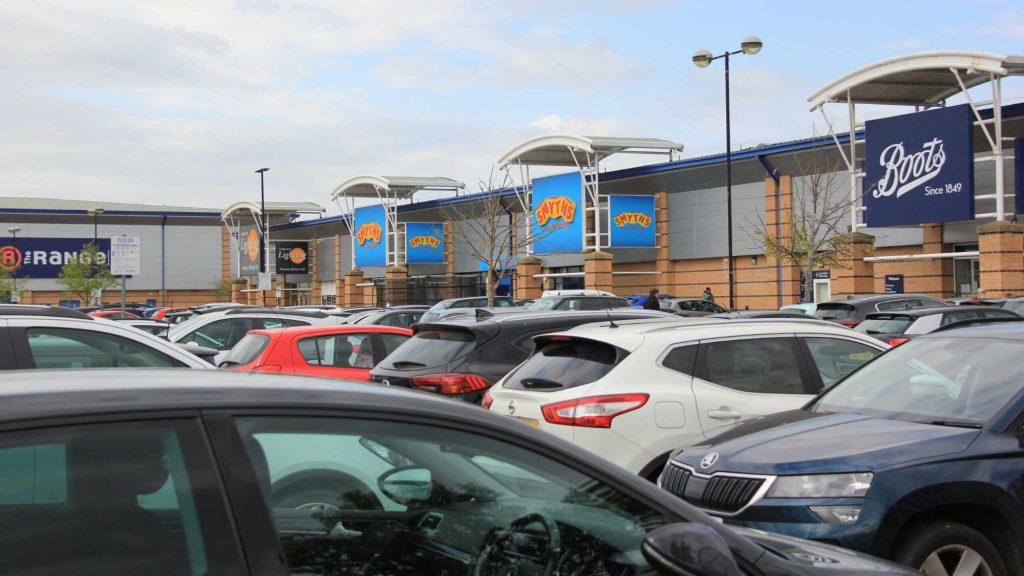
The problem is that cars require a lot of space. When travelling at around 30mph, each car needs something like 20 SqM of road space, at higher speeds it’s much more. As each car on the roads carries on average something like 1.5 people, it’s clear this is a terribly inefficient use of space. But it’s worse than that, because each car needs to be kept somewhere, so about 12 SqM for each car at each end of the journey. The practical upshot of this is a lot of space has to be given over to parking and making more room for the car meant spreading everything out.
Out of town shopping malls and business parks have the space for huge windswept areas of tarmaced land needed to provide car storage. Welcome to car centric planning where everything is spread out with vast distances designed to be pretty much only accessible by car
We’ve been building everything like this since the 1970’s Sprawling suburbia, out of town shops and employment areas virtually impossible to serve with public transport and the distances involved make it difficult to walk or cycle. This means every household has to find around £3000 a year just to keep a car on the road, plus the cost of buying it, he cost of fuel for each car and of course, the cost of repairs. This is a huge millstone around peoples necks.
Now of course easy access by car meant out of town shops sucked the lifeblood from town centres, likewise out of town employment areas took the working person – and the money they spent – away form the town centres as well. So there was less and less left for anyone who couldn’t drive.
We’ve come close to building a world where you require a car simply to be able to live. If you can’t drive, you can’t really take part in normal life and people without a car became considered an irrelevance by planners. It’s quite a big irrelevance, because even now, most people don’t drive.
But it’s not confined to adults, the biggest losers in all this have been children.
I was a kid and teenager in the 1960’s and 70’s. I was free range. I would play in the street and go for massive bike rides, By the time I was 15 or so we would do all day, truly long distance rides of 40 miles each way or more. Everyday I would get myself to school, either walking or on m y bike. Going to – and more importantly coming home from school was a social event, meeting up with friends and getting up to mischief on the way home.
This sort of unstructured freedom is essential for kids to learn about the world, it’s how they learn social interaction and all sorts of life skills. But now, thanks to the car, it’s all gone.
The streets are no longer the place to play football, the country lanes are places for people to hammer along in SUV’s and going to school means sitting in the backseat of the car looking at the headrest in front of you.
And then of course, there’s old people who are suddenly isolated because suddenly they can’t drive any longer.
All this has created a new type of drop-out, socially excluded people who, through no fault of their own, can no longer take part in society because they can’t drive. This is enforced social isolation, people living the life of a compulsory drop-out. Welcome to car dependant society.
Freedom became a funny word when the car companies got hold of it.